SecAI+ Domain 4: AI Governance, Risk & Compliance
Domain 4.0: AI Governance, Risk, and Compliance · 19% of the exam
The governance domain of the SecAI+ exam, made concrete: all 3 objectives (4.1–4.3) across AI governance structures and roles, responsible AI and risk, and the regulatory landscape from the EU AI Act to the NIST AI RMF. Follow AI governance lead Priya Raman as she charters Northstar's AI Center of Excellence, with hand-built diagrams, worked scenarios, and 60 exam-style questions.
Sitting the whole exam? All 4 domains for $59, just $34.05 more.
Studying for more than one exam?
- Interactive online guide
- Downloadable PDF
- Lifetime updates
- 30-day money-back guarantee
Secure checkout via Stripe · no account needed · instant access
19% of your exam score
Domain 4.0 is worth 19% of the CY0-001 exam. Walk in having mastered it, not hoping it doesn't come up.
Every objective, nothing extra
Built line by line from the official CompTIA SecAI+ objectives 4.1–4.3: 18 in-depth topics with worked scenarios and exam tips, in a 82-page guide you'll actually finish.
60 exam-style questions
Every question comes with instant feedback and a full explanation, so a wrong answer teaches you as much as a right one.
A brand-new certification
SecAI+ is CompTIA's newest exam, at the intersection of the two hottest skills in tech. The people who certify early are the ones who stand out.
Read a real excerpt, free
This is the actual opening of Module 4.1, AI governance structures, not marketing copy. If you like how it teaches, the rest of the guide reads the same way.
Explain organizational governance structures that support AI
Maya secured Nova. Darius put AI to work in the SOC. But nobody was governing the organization’s AI, who may build it, what rules apply, who answers when it fails. This module covers the structures that scale AI security beyond one project: the AI Center of Excellence, the policy → standard → procedure hierarchy, and ten roles the exam expects you to tell apart.
Domain 4 follows Priya Raman, Northstar Financial’s newly appointed AI governance lead. Nova’s launch was a success, and that is the problem: within months, marketing was drafting with a public chatbot, a lending team was piloting an unreviewed underwriting model, and Darius Cole’s SOC had quietly wired an LLM into triage. AI was spreading with no owner, no inventory, no shared rules. Priya’s charter: build the governance structure before a regulator or an incident does.
4.1 questions describe what someone does and offer four adjacent role names. Match verb to role: pipelines → data engineer; experiments → data scientist; productionizes → ML engineer; automates the lifecycle → MLOps; shared infrastructure → platform engineer; designs the solution → AI architect; designs the defenses → AI security architect; operationalizes policy → governance engineer; assesses risk → risk analyst; independently verifies → auditor.
The AI Center of Excellence
An AI Center of Excellence (CoE) is a dedicated, cross-functional team that concentrates the organization’s AI expertise and gives AI adoption a single accountable home. It aligns AI initiatives with strategy, authors the policies and standards everyone must follow, reviews and approves use cases, maintains the AI inventory, and spreads working knowledge: training, reusable patterns, approved tooling. Priya’s CoE pulls in Maya Chen for security, a voice from Darius’s SOC, plus legal, privacy, data, and business stakeholders.
The structural decision that makes or breaks a CoE is centralized versus federated. A fully centralized CoE does all AI work itself: consistent, but a bottleneck teams route around, which is how shadow AI is born. Priya chooses a hub-and-spoke model: the CoE (hub) owns strategy, policy, review, and shared platforms; embedded practitioners in each business unit (spokes) build under its standards. The hub enables; it does not merely gatekeep.
Not ready to buy? Read it later.
We'll email you a free sample of this guide as a PDF, no purchase needed.
Try 3 sample questions
Pulled straight from the guide's 60-question bank. Tap an answer for instant feedback and the explanation.
From module 4.1 · AI governance structures
1. After Nova's launch, Northstar teams begin adopting AI tools independently with no shared standards, no inventory, and no accountable owner. Which organizational structure BEST addresses this?
From module 4.2 · AI risks & responsible AI
1. A Northstar wealth-management analyst pastes a client's portfolio spreadsheet into a free personal chatbot to draft a summary. The tool was never approved by IT. Which term MOST precisely describes the analyst's use of the tool?
From module 4.3 · AI compliance & regulation
1. Northstar's counsel asks which AI governance instrument is enforceable law that can levy financial penalties. Which is it?
57 more questions like these are waiting inside.
What's inside
- 18 in-depth topics across 3 modules, mapped to objectives 4.1–4.3
- 60 exam-style practice questions with instant feedback
- Full answer key with explanations for every question
- A running governance scenario that ties all three objectives together
- Complete SecAI+ acronym & key-term reference
- 82-page downloadable PDF for offline study and printing
- Lifetime updates as the exam evolves
The modules, mapped to the objectives
- 4.120 Qs
AI governance structures
Explain organizational governance structures that support AI
AI Center of Excellence (CoE)Policy vs. standard vs. procedureAcceptable-use & model-approval policiesData engineer vs. data scientistML engineer vs. MLOps vs. platform engineerRisk analyst vs. auditor - 4.220 Qs
AI risks & responsible AI
Explain risks associated with AI
Responsible AI principlesTransparency vs. explainabilityDifferential privacyBias entry points (data / training / deployment)IP risk: both directionsShadow AI - 4.320 Qs
AI compliance & regulation
Summarize the impact of compliance on business use and development of AI
EU AI Act risk tiersOECD AI PrinciplesISO/IEC 42001 & 23894NIST AI RMF: Govern / Map / Measure / ManagePrivate vs. public modelsSovereignty vs. residency vs. localization
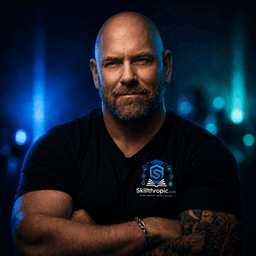
About the author
Chris Rees
Professional information technologist with 25+ years in IT and the author of 51 certification training courses, 50+ live on Pluralsight, rated 4.6/5 across more than 2,000 reviews. This guide is that same exam-focused teaching, in a format you can finish.
More about ChrisSitting the whole exam? Get the Complete SecAI+ Collection.
Every domain of the exam, including this guide, for $59, one time.
See everything insideQuestions, answered
Do I need an account to buy?
No. Checkout is a single Stripe form: email and card, about 30 seconds. We create your access from your checkout email automatically and sign you in the moment payment completes.
Is this up to date with the real CY0-001 exam?
Yes. The guide is mapped module-by-module to the official CompTIA SecAI+ objectives (4.1–4.3), and lifetime updates are included, so as the exam evolves your guide does too.
What exactly do I get?
Instant access to the interactive online guide with all 60 practice questions, plus a 82-page PDF you can download, print, and keep forever.
Do I need the other domains too?
This guide covers Domain 4.0 (19% of the exam). To prepare for the whole exam, the Complete SecAI+ Collection bundles all 4 domains for $59, less than the price of three guides.
What if it isn't for me?
Every purchase comes with a 30-day money-back guarantee. Email us and we'll refund you, no hoops.
Who wrote it?
Chris Rees, a professional information technologist with 25+ years in IT and the author of 51 certification courses published on Pluralsight, rated 4.6/5 across 2,007 ratings.
Be ready for 19% of the exam, for $24.95
Instant access, lifetime updates, and a 30-day money-back guarantee. The only risk is walking into the exam without it.
Get the guide