Uptime Tiers, N+1 vs. 2N, Pilot Light vs. Warm Standby: Designing for Failure in the Cloud

Chris Rees
25+ years in IT · Pluralsight author, 4.6/5 across 2,000+ ratings
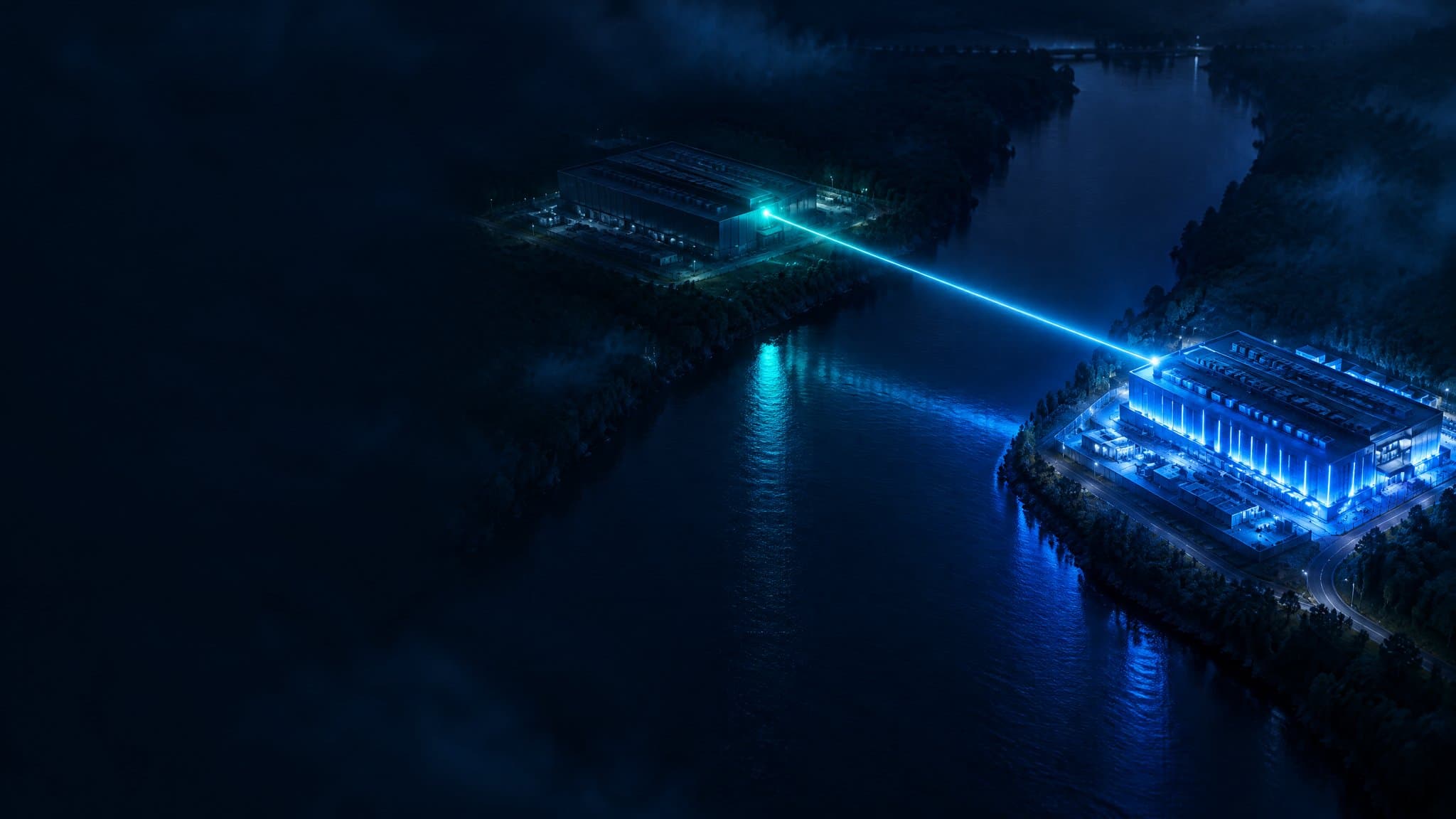
Cloud providers publish availability figures with a lot of nines, and customers read them as promises about their own applications. They are not. A region can be perfectly available while your single instance in it is down, and an application spread across two regions can survive a failure the provider's number never contemplated. CCSP Domain 3 covers the physical design of the data center and the logical design of recovery, and its questions are about matching the size of the failure you are planning for to the design that survives it.
Failure comes in sizes
The first question in any cloud resilience design is the scope of the failure. Providers structure their infrastructure so that failures are contained, and each container is a level you can design for.
| Scope | What fails | How you survive it |
|---|---|---|
| Instance | one virtual machine or container | auto-scaling groups, health checks, restart or replace |
| Availability zone | one data center or cluster of them, with its own power and cooling | run in more than one zone, behind a load balancer |
| Region | a whole geographic cluster of zones | replicate data and be able to run in a second region |
| Provider | the provider's control plane, an account lockout, or the provider itself | multi-cloud or an exit plan, and offline copies of your data |
The exam's pattern is a scenario that describes a design and a failure, and asks whether the design survives. A database replicated across two zones does not survive a regional event. Two regions with the same provider do not survive an account compromise. Each step up costs more, and the business impact analysis is what tells you which step the business is paying for.
Inside the building: data center tiers
Objective 3.2 covers designing a secure data center, and the exam's vocabulary comes from the Uptime Institute's tier classification. Tiers describe the redundancy of the power and cooling paths, and therefore whether the facility can be maintained or suffer a fault without going dark.
The two terms behind the tiers are what the questions test. N+1 means enough capacity for the load (N) plus one spare component, so a single failure of a generator or a chiller does not exceed capacity. 2N means two complete, independent systems, each able to carry the whole load, so an entire path can fail. Tier II is N+1 on components with a single path; Tier IV is 2N on everything. Concurrently maintainable (Tier III) means any component can be taken out for service without affecting the load; fault tolerant (Tier IV) means any single unplanned failure is absorbed.
The rest of objective 3.2 is the physical detail that makes tiers real: hot and cold aisle containment so that cooling is delivered where it is needed rather than mixing in the room, multi-vendor pathway diversity so that the two power feeds or the two network carriers do not share a duct or a substation, and location choices that avoid flood plains, seismic zones and single utility dependencies. A scenario about two "redundant" fiber links that were cut by the same backhoe is a pathway diversity question.
Recovery patterns, from cheapest to fastest
The cloud makes the classic hot, warm and cold site vocabulary more granular, because standby capacity can be provisioned in minutes and paid for only when running. Objective 3.5 tests four patterns along a single spectrum of cost against recovery time.
Backup and restore keeps copies elsewhere and rebuilds from them. Cheapest, slowest, and the pattern most organizations actually have. Pilot light keeps the core burning: the database replicates continuously and machine images are ready, but the application servers are not running until they are needed. Warm standby runs a scaled-down but complete copy that can take traffic immediately and is scaled up during failover. Multi-site active-active runs full capacity in more than one region and serves traffic from all of them, so a regional failure is absorbed by routing rather than recovery.
The exam's distinctions: pilot light versus warm standby is whether the application tier is running (warm) or merely ready (pilot); warm standby versus active-active is whether the second site is serving production traffic before the failure or only after it. And the trap is the same as on every other exam: replication is not backup. Every pattern above backup-and-restore copies corruption and deletion as faithfully as data, so point-in-time backups remain necessary even when active-active is in place.
The numbers: RSL joins RTO and RPO
Cloud recovery adds a third metric to the familiar two. Recovery service level is the fraction of normal capacity that must be available while running in the recovery environment. A warm standby sized at 30% of production is fine for a business whose RSL is 30% and a failure for one whose RSL is 100%. The three metrics together decide the pattern: RTO decides how much must already be running, RPO decides how continuously data must replicate, RSL decides how big the standby has to be.
Business continuity is wider than the technology
Objective 3.5 pairs disaster recovery with business continuity, and the exam keeps them separate. Disaster recovery restores the technology: the patterns above. Business continuity keeps the business operating while that happens, and in the cloud it has a specific extra concern: the provider's own continuity. A customer's plan has to cover what happens if the provider's control plane is unavailable, if the account is suspended, or if the provider exits the market, none of which a second region addresses. The exam's expectation is that the plan includes the provider's published continuity commitments, the exit and data-return terms in the contract, and offline copies of data in a form that can be restored somewhere else. Reversibility, the ability to leave a provider with your data intact, is the continuity control that only a contract can provide.
Resilience is shared too
The shared responsibility model applies to availability exactly as it applies to security. The provider is responsible for the resilience of the facility and the platform: power, cooling, the zone and region structure, the durability of the storage service. The customer is responsible for using that structure: deploying across zones, replicating across regions, testing failover, and keeping backups the provider's outage cannot reach. A scenario in which a customer's single-zone application went down during a zone failure and the customer blames the provider is a scenario about the customer's half of the responsibility, and the provider's availability figure was for the region.
Testing closes the objective, and it follows the same ladder as everywhere else: tabletop, walkthrough, simulation, parallel, full interruption, with management approval before any test that could cause the outage it is rehearsing. Cloud makes parallel testing cheap, because a recovery environment can be built, exercised and torn down without touching production, which removes the last excuse for not doing it.
Four stems, decoded
- A data center marketing sheet says "fully redundant N+1 power, Tier IV." N+1 is a Tier II characteristic; Tier IV requires 2N with independent paths. The claim is inconsistent, and the question is testing whether you know which term belongs with which tier.
- An application with a 15-minute RTO and a limited budget runs in one region, with backups copied to another. Backup and restore cannot meet 15 minutes. Warm standby fits the objective; pilot light might, if the application tier can be provisioned fast enough; the budget decides between them.
- Both of a facility's carriers lost service when a single roadside cabinet was damaged. No pathway diversity. Redundancy existed on paper and shared a physical path.
- A customer running in two availability zones asks whether it is protected against a regional disaster. No. Zones share a region. Regional protection needs a second region and the data replication to go with it.
Key takeaways
- Design for a failure size: instance, zone, region, provider. Each step up costs more, and the business impact analysis decides which one is paid for.
- Tiers: I single path, II N+1 components, III concurrently maintainable, IV fault tolerant with 2N. Pathway diversity is what makes redundancy real.
- Backup-and-restore, pilot light, warm standby, active-active. The difference is what is already running before the failure, and replication is still not backup.
- RTO sizes what runs, RPO sizes replication, RSL sizes the standby.
- Availability is shared. The provider builds the zones; the customer has to use them, and test.
Data center design and business continuity are objectives 3.2 and 3.5 of CCSP Domain 3, Cloud Platform and Infrastructure Security, 17% of the exam. They apply in the cloud the high availability and backup principles Security+ covers on premises, against the recovery targets set by the business impact analysis. Work all 20 topics with our CCSP Domain 3 study guide.
#CCSP #ISC2 #CloudSecurity #DisasterRecovery #HighAvailability #DataCenter #UptimeTiers #BusinessContinuity #InfoSec #CyberSecurity
Design for the failure you expect
Data center design and business continuity are two of five objectives in CCSP Domain 3, 17% of the exam. Work all 20 topics, from infrastructure components and secure data center design through risk analysis, security controls and disaster recovery, with 50 practice questions.
Get the CCSP Domain 3 guideKeep reading
Snapshot, Hash, Isolate: Digital Forensics When the Server Is Someone Else's
Every forensic rule you learned assumes you can pull the plug. In the cloud you cannot, and the disk belongs to someone else. CCSP Domain 5 on investigating on infrastructure you do not own: forensic readiness before the incident, isolate versus terminate, acquisition by snapshot and hash, chain of custody across a provider, what the provider will and will not give you, and the communication clock that starts the moment personal data is involved.
Read CCSP deep divesSAST, DAST, IAST, SCA: Testing the Cloud Application Pipeline, and the Supply Chain Attacks That Slip Past It
Most of a cloud application is code nobody on the team wrote. CCSP Domain 4 on making that safe: the four testing families and where each fits in the pipeline, black box against white box, abuse cases, why a passing test suite says nothing about a poisoned dependency, and the supply chain attacks the exam names, dependency confusion, typosquatting, compromised builds and copyleft licensing, with the software bill of materials that makes them visible.
Read CCSP deep divesVM Escape, Management Plane, Noisy Neighbor: The Cloud Threat List and the Controls CCSP Maps to Each
A director asks what happens to the shops if the provider has a very bad day, and the answer is an availability figure. That is a likelihood; the question was about impact. CCSP objectives 3.3 and 3.4: risk identification and analysis for cloud infrastructure, the threats the platform itself invites, from VM escape and hypervisor compromise to management plane abuse and noisy neighbors, the four treatment strategies, and the physical, system, virtualization, identity and audit controls the exam expects you to match to each.
ReadFollow Skillthropic
Keep learning between study sessions
The same exam-focused teaching, in smaller pieces, wherever you scroll.
Enjoyed this? Get the AI security news that matters.
Join The AI Security Brief for the top AI security news, plus what's important to the C-suite. Free, straight to your inbox.
No spam. Unsubscribe anytime.